 COME
IPL Score Reading: Runs, Wickets, Overs and Match Status
A score contains several different signals: runs, wickets and overs, together with the team, innings and match status. Read those parts in order before drawing a conclusion.
Build the score from its parts
Start with the batting team and runs, then read wickets lost and the overs completed. Check whether the innings is ongoing or finished. When you need a real result, use the tournament scorecard or report; a standalone graphic may omit the second innings and final status.
Read the example in context
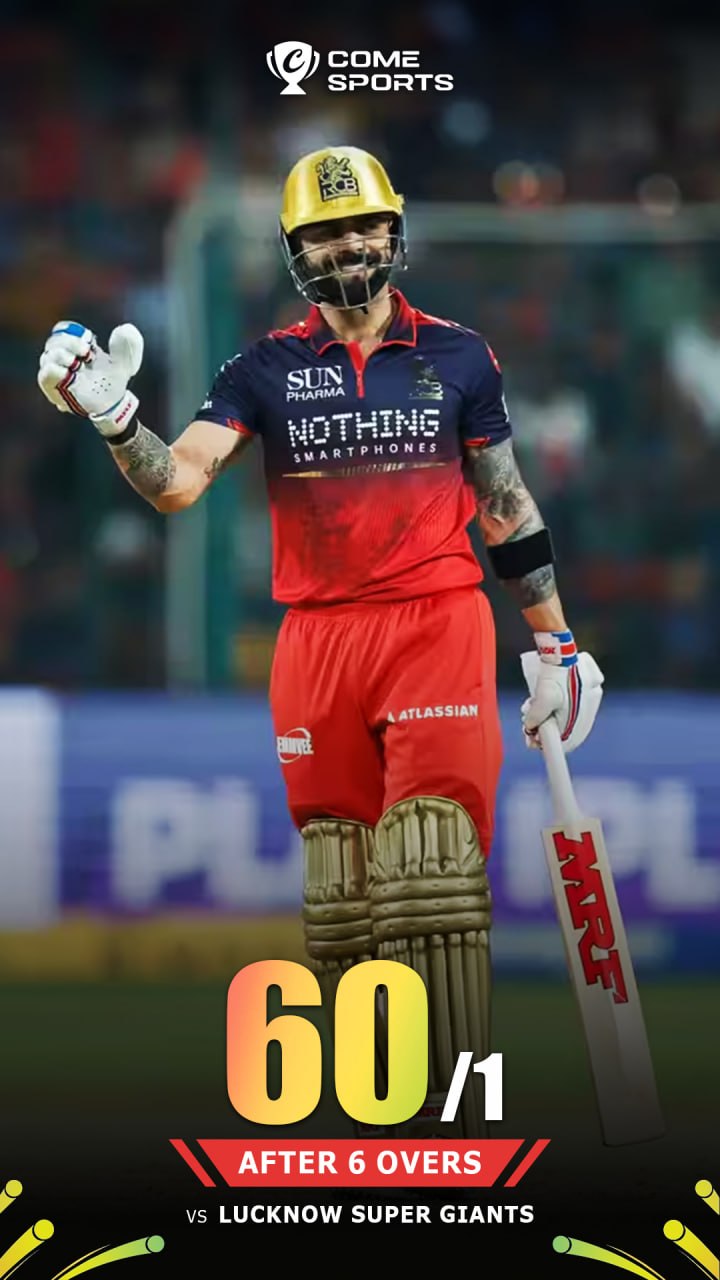
The graphic shows 60/1 after six overs. The simple run rate for that whole-over example is 60 divided by six, or 10 runs per over. That describes scoring so far; it does not predict the final total. The linked guide covers partial-over notation and further examples.
Check a real match at the tournament source
- Confirm the tournament season and both teams.
- Read the date and stated time zone for a fixture.
- For a score, check the batting team, innings and match status.
- For an outcome, use the completed scorecard or match report.
Cricket information and COME are separate questions
COME sports graphics illustrate the notation discussed here. A logo, category label or score graphic is not a promise of current match access, a live broadcast or an IPL partnership. Check any product feature and its conditions at the service you use. Android file help is available through the Download page.
Questions when reading a score
A runs-and-wickets figure does not supply the whole match result. A recent share date does not make an archived picture current. Check the surrounding date, innings and status before using a number outside its original context.
Find Android download help
Use the download guide if your next task is reviewing the external entry and Android file sequence.